
[special_text animation=”” tagname=”h2″ color=”#444444″ font_size=”34″ font_weight=”400″ font_style=”left” font=”default” margin_top=”” margin_bottom=”” align=”left”]5 Species of Salmon[/special_text]
Chinook Salmon
(AKA Spring, Tyee and King)
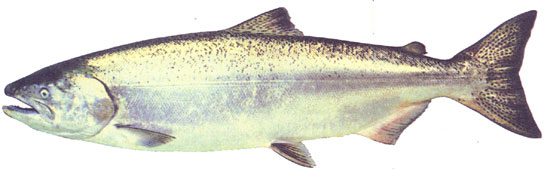
Marine Phase
- Black gums and a silver, spotted tail distinguish the Chinook from other salmonids;
- Lightly spotted blue-green back;
- Largest, most prized game fish – weighing between 1.5 kg and 30 kg; Chinook return to spawn as early as three to as late as eight years.
- Lives three to seven years;
- Average-size Chinooks are often known as springs in B.C. Those over 13.5 kg are called tyees, and in the U.S., Chinook are called king salmon.
Coho Salmon
(AKA blueback and silver)
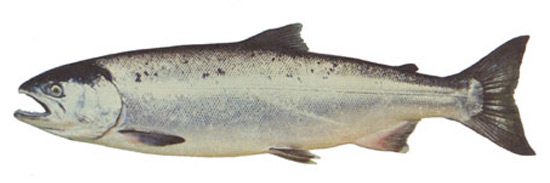
Marine Phase
- White gums, black tongues;
- A few spots on the upper portion of their bodies;
- Silver-coloured tails;
- Wide tail base;
- Bright silver with a metallic blue dorsal surface;
- Usually live for three years and grow rapidly in their final year;
- Weigh between 1.3 kg and 14 kg;
- In the Strait of Georgia from April to early June, small Coho passing from the grilse stage to maturity are called blueback’s.
Pink Salmon
(AKA humpy)
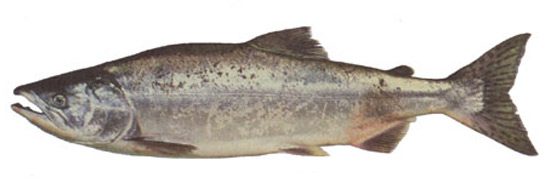
Marine Phase
- Tiny scales and a tail heavily marked with large oval spots;
- Unlike the other salmon species, the tail of a pink has no silver in it;
- In the sea, pinks have silver bodies with spotted backs;
- Smallest of the Pacific salmon, usually weighing about 2.2 kg, but occasionally reaching 5.5 kg;
- More abundant in northern waters in even-numbered years and in southern waters in odd-numbered years;
- Live only two years.
- Each pink salmon you keep must be at least 30 cm long.
Sockeye Salmon
(AKA red salmon)
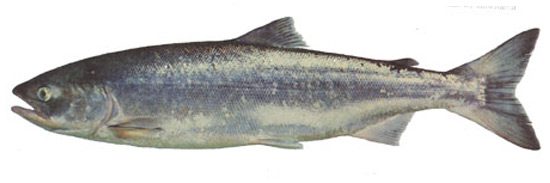
Marine Phase
- Almost toothless, with numerous long gill rakers;
- Prominent, glassy eyes;
- Slimmest and most streamlined of the Pacific species;
- Silver-blue;
- Lives from four to six years;
- Weighs between 2.2 kg and 3.1 kg but can reach 6.3 kg;
- Young sockeye remain in fresh-water nursery lakes a year or more before migrating to the sea.
- Each sockeye salmon you keep must be at least 30 cm long.
Chum Salmon
(AKA dog salmon)
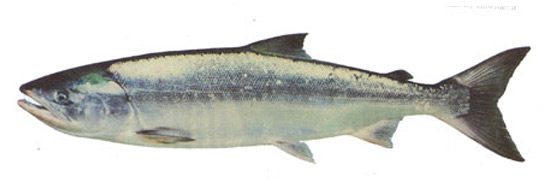
Marine Phase
- White tip on the anal fin usually identifies a chum salmon;
- Resembles sockeye, but larger;
- Silvery sides and faint grid-like bars as they near spawning streams;
- Tail base is narrow and there is silver in the tail;
- Lives three to five years;
- Weighs about 4.5 kg to 6.5 kg, but they have been known to reach as much as 15 kg.
- Each chum salmon you keep must be at least 30 cm long.